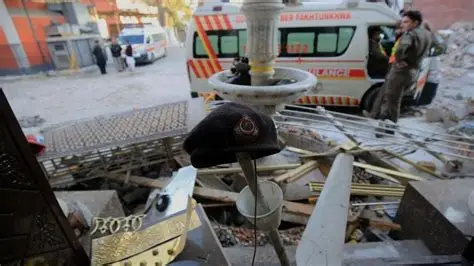

An unexpected explosion at the Imam Ali Ibn Abi Talib Mosque in Wadi al-Dhahab, Homs, Syria, on the 26th of December 2025 caused devastation during Friday prayers; Friday is known to be one of the most important days for Muslims to observe communal worship. The explosion killed at least eight innocent people and injured many more. The effects of this horrific event reached not only Syria but all around the Middle East and beyond.
provides an extensive account of this horrific attack; here you will find a breakdown of this tragic event, its significance, human effects, political/sectarian ramifications and what it means for Syria’s future and stability in the region.
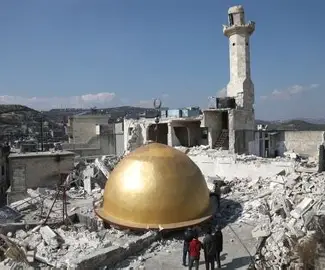
1.The Tragedy: The Explosion in Homs
The Imam Ali ibn Abi Talib Mosque is located in Wadi al-Dhahab, Homs, a city with rich historical diversity and a long history of recurring violence during Syria’s ongoing conflict. For example, on Friday afternoon many people congregated at the mosque for the first prayer of the day.
The Imam was just completing his sermon and telling the worshippers to leave immediately when a powerful explosion occurred within the mosque.
characteristics of the city of Homs, such as its historical diversity, have all played a part in the ongoing cycle of violence that has been seen for decades in Syria and beyond.
According to press reports and the government of Syria,
there were at least eight confirmed deaths and 18 other injured after the explosion occurred. Many of the injured were taken to local hospitals.
The Syrian government officials labelled the bombing of worshippers as “a terrorist attack” with bombs placed throughout the mosque.
According to Public Tv English, the bomb went off while people were praying at the mosque.
It has been reported that images and video of the mosque show windows blown out, debris covering the prayer rugs, and blood everywhere; it is unimaginable what happened in such a peaceful environment.
Originally, reports varied slightly because they were released before all the facts were known. Most reports list eight people confirmed dead, and more will be reported soon after investigations are completed.
2: The Target: why a mosque?
On the surface, it makes little sense that someone would target a place of worship, and one would be inclined to think this bomb to be completely random; however, due to division in Syrian society based on sects, and over ten years of civil war and government confusion regarding who holds loyalty to whom, an even bigger picture emerges.
Ibn Ali al Talib Imam Mosque is located in a neighborhood that has a large presence of Alawites; this is a minority branch of Shia Islam that the former president belongs to.
Although religious identity alone cannot explain the attack, many factors must be looked at together to form a better understanding of the bigger picture.
🔹 Tensions Based on Sectarian Grounds: Syria’s civil war has often occurred along sectarian lines, with Sunni communities generally on one side and Alawite, Christian, Kurdish, and other minority communities on the other. Extremist groups have used sectarian tension to recruit supporters and fuel division.
🔹 Political Crisis: Syria has been in a state of political instability since the fall of the regime led by Assad in December 2024, with multiple groups attempting to assume leadership roles over a primarily ungoverned nation.
🔹 Groups of Extremists: Extremists such as those with affiliations to ISIS, have claimed to have attacked multiple mosques — stating in online forums that they would attack minority communities and organizations. Their goal is to eliminate the ties communities have to one another by attacking religious or culturally significant gatherings and community events.
One of the extremist organizations, Saraya Ansar al-Sunnah, which is known for attacking minority communities, has taken credit for the mosque bombing that occurred on March 29; however, independent verification of their claim has been difficult to obtain.
3.The Aftermath — Persons Affected and Community Affected
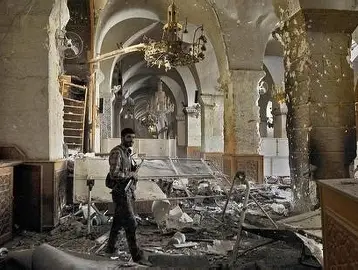
The initial human cost of this bombing was horrific:
First and foremost were the families who were directly affected by the injury or death of loved ones who went to worship.
Secondly, those who survived suffered both physiological (physical) and psychological trauma, with many whose injuries will affect them for the rest of their lives.
Thirdly, the children and teenagers have experienced violence in a location that, up until this point, had been a place they associated with a safe environment and supplicating to God.
Local community members described a general sense of panic and fear as ambulances were dispatched, and emergency services responded to the area. Witnesses described how worshippers were in shock, attempting to assist those injured, and trying to comfort one another amidst the wreckage. The local community has been impacted by this attack, as they have already been affected by years of economic diversity and instability.
4.There have been responses to the bombings throughout Syria and around the region.
Local Community Response
The Syrian government condemned the bombings as being cowardly acts of cowardice meant to create instability and chaos among the people of Syria, and they said that they would pursue and prosecute the people responsible and would ensure that there would be security for all of the Syrian nation. On behalf of the public, the State TV Channel (Public TV English) echoed these sentiments.
International Community Response
Many countries and organizations in the Middle East, including Saudi Arabia, Jordan, Lebanon, Turkey, and other countries, condemned the attacks against innocent people and expressed their support for the victims and the Syrian people (Al-Jazeera.net)
Overall, the strong condemnation from all of these organizations demonstrates a strong opposition to the intentional targeting of civilians during a religious ceremony and also the growing concern about sectarian violence.
5. Context: Syria’s Long War and Fragile Peace
and Prime Minister Bashar Jaafari, is facing significant obstacles in creating a stable nation-state and rebuilding lives. These obstacles include continued sectarian violence, lack of stable governance and institutions, and lack of long-term economic planning.
Context to which this mosque explosion should be understood
The context of Syria’s long and ongoing civil war and the fragile peace achieved since the fall of President Bashar al-Assad’s regime in 2024 needs to be fully understood in order to appreciate the impact of this mosque explosion.
How does the mosque explosion relate to the larger picture of Syria?
In order to fully grasp the impact of the mosque explosion, it must be understood in the greater context of Syria’s ongoing conflict since 2011 and how it has altered the fabric of the country.
The civil war continues to divide Syria and its people into warring factions and has resulted in many foreign interventions and the emergence of many extremist groups.
What began as peaceful protests has now evolved into a large fight involving a multitude of internally divided factions and foreign powers.
The fall of Bashar al-Assad’s regime at the end of 2024 ushered in an entirely new phase in Syria — opportunity for peace at the same time carries with it a greater risk of a violent and sectarian backlash and intense power struggles among the country’s many factions.
In certain areas of Syria, such as Homs, where many of the different communities that existed there before the war had coexisted relatively peacefully for generations, there has now been an increase in sectarian violence as a result of the war.
Extremist groups will often exploit sectarian fault lines and use them to provoke retaliatory actions that will deepen divisions in society.
Major battles have ceased for the most part in many areas of the nation; however, ISIS and similar extremist groups continue to perpetrate violence through the use of guerilla-type attacks and bombings. Thus, the presence of these extremist groups complicates the ability of the nation to recover from its past and continue the development of a secure and peaceful society.
6.Sectarian Aspects and Sociological Effects
The Homs blast has an underlying religious issue, and it’s one of the more sensitive areas of focus for many people in the Muslim sect. Although the religion itself cannot be blamed as a source of conflict, extremists capitalize on sectarian identity when they seek justification for acts of violence.
The attack on the mosque occurred within an Alawite (Shiite) neighbourhood and historically, Alawite Muslims have occupied a different space compared to Sunni Muslims and have been targeted both politically and socially throughout Syrian history.
Saraya Ansar al-Sunnah and other extremist organisations use sectarian rhetoric to frame their justification for carrying out their attacks, attempting to create an atmosphere of fear and discord. No matter the religious background of each of the recipients of the attack, the fact that the attack was committed in an Alawite neighbourhood raised the level of fear for acts of sectarian public retribution on the individuals who reside there.
Wikipedia
Such violence can create greater divides between communities, hindering the possibility of future reconciliation or community co-existence.
7.Consequences for Syria’s Future
The explosion at the mosque is more than just an item in a news article; it is a painful reminder of the fragile path that has brought Syria to the present state of relative stability and normalcy.
Threats to Syria’s national security
The ongoing brutalisation of civilians and the recurring assaults perpetrated by extremist elements using bombings, I.E.D. and suicide ideology are evidence that Syria’s national security continues to be under attack by extremist organisations throughout the world. Without a comprehensive counter-terrorism and community outreach programme, violent extremist attacks are likely to occur on a larger scale.
Bridging Trust
The Syrian leaders now must rebuild the trust amongst their communities so they can move toward lasting peace by providing justice for the victims, by protecting the minorities in Syria, and through an inclusive political dialogue.
Countries across the globe and in the region have important roles in shaping the future of Syria; these countries will need to work together to avoid further destabilizing the country through negotiation, financial assistance for reconstruction, and peacekeeping efforts.
8.Stories of Survivors and Communities
When the blast went off, people began to tell their stories:
A survivor describes hearing a loud noise on the last day before the sermon of the explosion that broke their windows and broke the peace they had felt.
Wounded worshippers described how, after the blast, there was chaos around them and some wounded crawled to safety.
These are children who will no longer have parents, families who will no longer have support, and communities who are now mourning their neighbours. We hear their grief quietly in spoken words, tears, and in the wards of the local hospitals. The pain of the victims reflects the true costs to human life in the ongoing conflict.
9.Lessons Learned and Future Directions
The tragedy of the explosion has revealed to all of us lessons:
- The foremost priority of all Government leaders must be to create a safe environment for all their citizens.
- Protected areas include places of worship, educational institutions, marketplaces, and health facilities. More secure surveillance will help to provide protection, and improve cooperation at the local level.
- Supporting efforts of reconciliation
- Dialogue can serve as the means to bridge sectarian divisions and promote peace in the long term.
- Support from the world
- The humanitarian and diplomatic support of the world’s powers and organizations will be critical to the recovery process for the country of Syria.
10.Conclusion
The explosion of the Imam Ali ibn Abi Talib Mosque located in Homs, Syria, establishes through its tragedies, both in deaths experienced and trauma experienced, as well as through the intense fear that was experienced by many in this violent act, that even though there may be no longer large-scale battles occurring within Syria, that violence and instability are likely to be ongoing threats to people’s lives. As a result, the continuing level of peace within Syria is very fragile. However, the resilience of individuals, families, and communities could serve as a ray of hope.
The collective acts of both Syrians and the international community associated with security, justice, and reconciliation will be integral if Syria is to break the cycle of continual violence and to establish a future where mosques, and all faith-based institutions, are once again sanctuaries of peace.