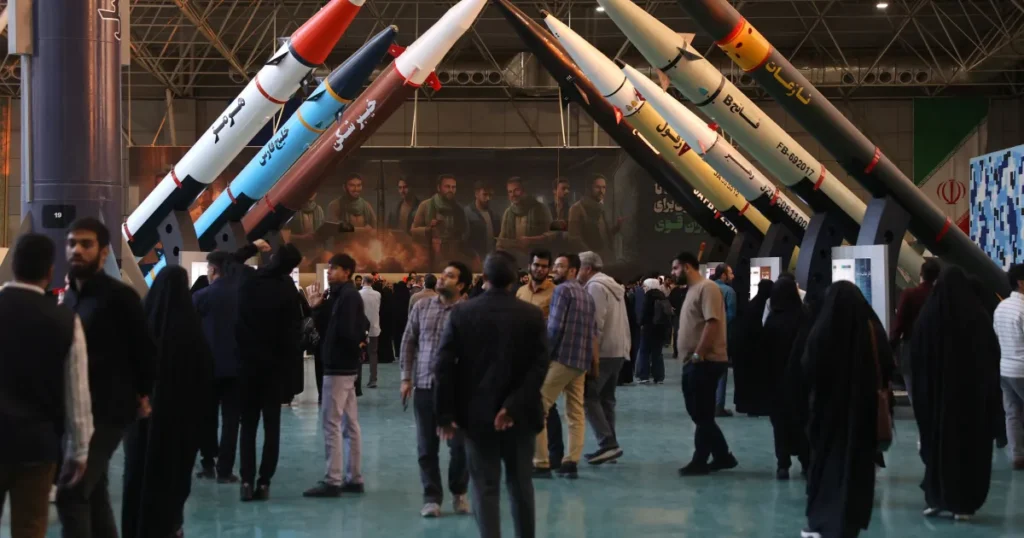

In the wake of the latest Middle East conflict, analysts have noted that Tehran has fundamentally shifted its military strategy. The brief but intense “12-day war” in June 2025, when Israel struck Iranian sites and Iran retaliated with ballistic missiles, marked a turning point. Afterward – and especially following the death of Supreme Leader Ali Khamenei – Iranian leaders adopted a far more aggressive stance aimed at regime survival. As one Al Jazeera explainer summarizes, “this year… Iran has revised its military strategy to a more aggressive one focused on the Islamic Republic’s survival”. In practical terms, experts say Iran is now playing for endurance: absorbing punishment, retaliating broadly with drones and missiles, leveraging proxies, and even threatening global chokepoints to raise costs on its adversaries.
Understanding these shifts is critical. Military and policy experts have distilled “key tips” on Iran’s new war doctrine, drawing on recent developments. Below we highlight the main takeaways:
Regime Survival is Priority #1
All analysts agree that Iran’s overriding goal is to keep the government intact. Iran’s leaders now view “victory” simply as the continuation of the regime. As ECFR’s Majda Ruge notes, U.S.-Israeli strikes have become “an existential threat to the Iranian regime”, and Iran’s response has been to “escalate in return – making this as bloody as possible… to ensure its survival”. In other words, Iran will fight mainly to outlast and exhaust its opponents.
Asymmetric Endurance and Second-Strike
Iran’s strategy emphasizes survivability in the face of superior air power. Experts say Tehran is pursuing “asymmetric endurance”, meaning it hardens defenses to absorb initial attacks and preserve the ability to strike back.
This involves fortifying missile sites (“missile cities”), dispersing command centers, and accepting some losses in order to keep a second-strike capability alive. In practice, Iran is prepared to weather an initial barrage – even suffering damage – so that it can retaliate decisively.

Massed Drones, Missiles and Proxies
Iran has moved from a mostly defensive posture to active retaliation. Analysts note Iran now fires “large salvos of ballistic missiles and loitering munitions” at its enemies, combined with proxy attacks to overwhelm their defenses.
For example, Iranian forces recently launched waves of Shahed drones and ballistic missiles across the Gulf – over 200 total in one day – targeting U.S. bases in the UAE and military sites in Israel.
Many of these were intercepted, but debris and some strikes still caused damage to airports and civilian areas in Dubai and Abu Dhabi. The idea, as analysts put it, is to saturate U.S./Israeli missile defenses and impose costs on the region.
Economic and Regional Targets
Iran’s new strategy explicitly threatens regional stability and global markets. Tehran has even struck Gulf neighbors that previously were left alone.
In one notable example, Iranian missiles and drones pummeled Dubai and Abu Dhabi in early 2026. Analysts were surprised by this “overwhelming assault on the UAE,” which shattered the old non-engagement understanding.
Iran is clearly trying to leverage the Gulf’s economic importance by threatening oil routes and financial hubs.
Calculated Escalation (Not All-Out War)
While much more aggressive, Iran is still measured in its approach. Analysts note Iran appears more structurally aggressive and risk-accepting than before, but it stops short of total war.
Experts say Tehran is careful not to trigger a campaign that would truly topple the regime. Despite hawkish rhetoric, Iran’s leadership has been engaging in calibrated, episodic bursts of aggression rather than permanent high-intensity warfare.
Maintaining Internal Cohesion
Experts note one unspoken aim is to signal unity at home. Iran’s leadership has been showing coordinated retaliation to deter internal dissent.
By publicizing massive counterstrikes, Tehran sends a message that the government still stands firm and retains command and control.
Background: The June 2025 Iran–Israel War
To understand the shift, recall the June 2025 conflict. On June 13, 2025, Israel launched air strikes on Iran’s nuclear and military sites, killing several senior scientists and commanders. In retaliation, Iran fired hundreds of ballistic missiles at Israeli cities.
Finally, on June 22 the United States entered the fray, hitting Iran’s Natanz, Fordow and Isfahan nuclear facilities. A ceasefire followed on June 24.
Experts argue this brief war shattered Iran’s old strategic calculus and forced Tehran to rethink its approach.
Conclusion: What Expert Tips Teach Us
In summary, analysts advise that anyone tracking Iran should remember these key lessons. Iran fights to survive, plans to absorb early attacks and hit back, combines missile and drone volleys with proxies, and is willing to widen the battlefield economically.
These expert insights paint a picture of a new Iranian war doctrine — one that is more offensive, risk-taking and wide-ranging than before.
Understanding these strategic shifts is therefore crucial for anticipating future developments in the Middle East and beyond.
Sources: Defense analysts and international news reports from outlets like Al Jazeera, Brookings Institution, Atlantic Council, ECFR and others.