
Iran, North Korea, Cuba, and Venezuela are all frequently mentioned in discussions about U.S. foreign policy and sanctions, but they differ dramatically across many dimensions. What makes Iran different from North Korea, Cuba, and Venezuela? Despite surface-level similarities – such as strained relations with the United States – the four countries have distinct natural resources, political systems, geographic locations, economic structures, and international relationships. This article explores those key differences with expert-backed insights and real-world examples. It draws on recent data and credible news sources (such as Reuters and Al Jazeera) to provide an up-to-date, in-depth comparison of these nations.
Iran has vast reserves of oil, gas, and minerals, which make it fundamentally different from North Korea, Cuba, and Venezuela…
Natural Resources: Oil, Gas, and Minerals
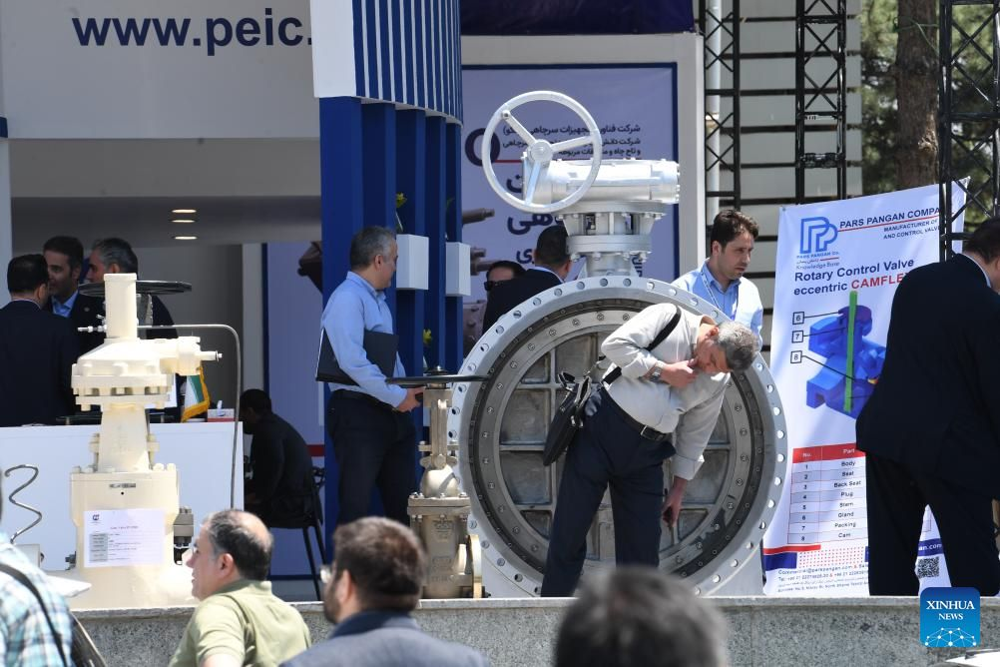
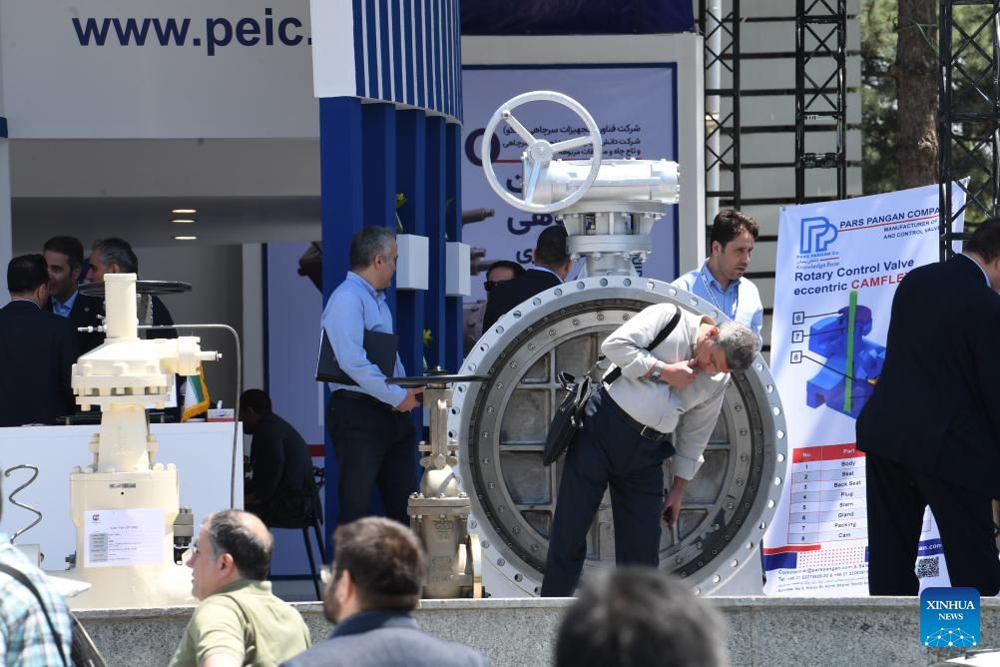
Image: Iranian oil and gas production highlight the country’s energy wealth. One striking difference is in natural resources. Iran is rich in hydrocarbons and minerals. According to the U.S. Energy Information Administration, Iran has the world’s second-largest proven natural gas reserves. As of late 2025, it produced about 3.3 million barrels per day of oil and held proven oil reserves of roughly 208.6 billion barrels, making it one of the world’s top oil holders. Crucially, much of Iran’s oil is relatively “light” and sweet (high API gravity, low sulfur) compared to Venezuela’s famously heavy crude. For example, Venezuela’s vast oil reserves are dominated by ultra-heavy oil that is difficult to refine, whereas Iran’s crude tends to be lighter. In addition to oil and gas, Iran has huge mineral wealth – it holds roughly 7% of the world’s total mineral reserves. Its assets include the world’s largest zinc deposits, major copper reserves (about ninth-largest globally), and significant iron ore (12th-largest), plus rare earths and metals like lithium (recently discovered ~8.5 million tons) that are critical for batteries and technology. The economic value of Iran’s untapped natural resource wealth is often estimated at tens of trillions of dollars. One report cited Iran’s oil and mineral assets as on the order of $27 trillion – a factor that analysts say puts Iran squarely in U.S. strategic calculations.
By contrast, North Korea has far fewer easily extractable resources. Pyongyang has coal, iron ore, magnesite, and some rare minerals, but it has no proven oil and gas reserves. In fact, the U.S. Energy Information Administration notes North Korea has “no proven oil reserves or petroleum production”. As a result, North Korea imports most of its energy (mainly from China) and lacks an export-oriented energy sector. Cuba has even more limited fuel resources; it produces only a few tens of thousands of barrels per day of crude oil (roughly 50,000 bpd in recent years) and very modest natural gas. Instead, Cuba’s geology favors minerals like nickel and cobalt – Cuba has some of the world’s largest nickel laterite deposits. The U.S. Geological Survey notes that Cuba ranks among the top 10 global producers of cobalt and nickel, metals vital for batteries. But Cuba’s petroleum output is tiny, and it has long relied on subsidized oil shipments from allies (notably Venezuela in recent decades).
Venezuela contrasts with Iran primarily in oil type: it sits atop the world’s largest proven oil reserves, but most of it is ultra-heavy and extra-heavy crude. Venezuela also has some natural gas, gold, and rare minerals, but the economy remains overwhelmingly dependent on oil. Importantly, Venezuela’s crisis and sanctions have left much of its wealth untapped. In short, Iran’s diversity of resources (gas, light oil, metals) and immense reserves set it apart from North Korea’s resource-poor economy, Cuba’s small-scale energy sector (with a focus on nickel), and Venezuela’s heavy oil–dependent export profile.
Political Systems
Iran’s government is a theocratic republic, which blends clerical oversight with elected institutions. According to Britannica, “Iran is a unitary Islamic republic” established after the 1979 revolution. Its Supreme Leader (a senior Shi’ite cleric) holds ultimate authority over the executive, legislature, and judiciary. Elections are held for president and parliament, but candidates are vetted by religious councils. In practice, power in Iran is shared between elected officials (president, parliament) and appointees (Guardian Council, Revolutionary Guards) under the Supreme Leader’s overall direction.
By contrast, the other three countries each have autocratic, single-party rule (though with local variations). North Korea (the DPRK) is a hereditary communist dictatorship led by the Kim family. There are no competitive elections or legitimate opposition parties – the Kim regime tightly controls every aspect of society. As one scholar notes, North Korea might be “the only country in the modern world in which there is no domestic political opposition whatsoever,” with the hereditary dictatorship of the Kim family ruling since 1946. Citizens do not elect leaders in any genuine sense, and dissent is brutally suppressed.
Cuba is officially a socialist republic, but in practice it is a one-party communist state. The Communist Party of Cuba is enshrined by constitution as the only legal party, and it controls the government and media. A new constitution approved in 2019 reaffirmed “the island’s single-party socialist system” and a centrally planned economy. Elections in Cuba (for a parliament and president) occur, but candidates are not independent; as Al Jazeera reports, 87% voted for the constitution that preserved one-party rule. In short, power in Cuba remains monopolized by the Communist Party and its institutions (like the National Assembly), and major reforms to introduce competition or multiple parties have been very limited.
Venezuela is formally a republic with elections, but it has increasingly become an authoritarian one-party state under President Nicolás Maduro (following Hugo Chávez’s model). Democratic norms have eroded: opposition parties have been disqualified, elections are widely viewed as unfair, and state institutions (courts, electoral council) are stacked with regime loyalists. Analysts note that Venezuela shows “growing autocracy,” with Maduro violating democratic tenets to maintain power. Elections are held, but power is consolidated in the president and ruling PSUV party. By contrast to Iran’s mixed (albeit constrained) system with religious oversight, North Korea’s totalitarian hereditary regime, Cuba’s classic one-party socialism, and Venezuela’s competitive authoritarianism all differ significantly in who rules and how they rule. For example, Iran’s Supreme Leader is a cleric but presidents have terms and some accountability, whereas Cuba’s and Venezuela’s leaders are never challenged by a free opposition.
To summarize political differences:
Venezuela: Constitutional democracy in name, but in practice a semi-authoritarian regime under Maduro.
Iran: Islamic Republic with a Supreme Leader overseeing elected president and parliament.
North Korea: Totalitarian Juche/Kim dynasty rule – no genuine elections or opposition.
Cuba: One-party socialist state (Communist Party rules), elections but no pluralism.

Geographic Location
Iran’s geography gives it a unique strategic position. It lies in the Middle East (West Asia), bordering Central Asia and South Asia, and controls parts of the Persian Gulf. In fact, Iran “controls the northern coast of the Hormuz Strait”, a crucial chokepoint where roughly 20 million barrels of oil per day transit – about one-fifth of the world’s seaborne oil. It borders Iraq, Turkey, Afghanistan, Pakistan, and reaches toward the Caspian and Persian Gulf. This crossroads location – between Asia, Africa, and Europe – is often cited as increasing Iran’s strategic value.
By contrast, North Korea is a small peninsula country in East Asia. It shares a heavily fortified border with South Korea (DMZ), and borders China and a small frontier with Russia. It is mountainous and largely self-contained. Cuba is an island in the Caribbean, just 90 miles off the coast of Florida (United States). Its proximity to the U.S. (historically just 145 kilometers) made it very accessible to American influence and intervention. Venezuela lies in northern South America, with a long Caribbean coastline (the Orinoco and Carabobo basins) and borders with Colombia, Brazil, and Guyana. It straddles the Andes and Amazon regions. These locations shape each country’s climate, neighbors, and trade routes: Iran’s access to the Persian Gulf vs. Cuba’s Caribbean island logistics vs. North Korea’s isolation behind mountains vs. Venezuela’s Amazonian interior and Caribbean outlets.
Key geographic contrasts:
- Iran: West Asian core with Persian Gulf access; straddles continents.
- North Korea: Northeast Asian peninsula, landlocked by neighbors (China, S.Korea).
- Cuba: Caribbean island near the U.S., gulf climate.
- Venezuela: Tropical South American country on the Caribbean Sea.
Economic Structure (Currency, Inflation, Sanctions)
The four economies are very different in size, structure, and health. Iran has a middle-income economy driven by oil and gas exports, manufacturing, and services, but it is heavily burdened by international sanctions. Its currency, the Iranian rial, has suffered massive inflation and devaluation. For example, before a conflict in mid-2025 the exchange rate was about 800,000 rials per U.S. dollar; by January 2026 it had roughly doubled to 1.62 million rials per dollar. Sanctions on banking and oil have starved Iran of foreign currency, fueling inflation. Iranian analysis notes that chronic deficits, money printing, and fears of war have led to rapid rial depreciation. Inflation in Iran has been running in the tens of percent per year, crippling purchasing power and leading many to dollarize savings. The economy is partly state-run (with large companies under government control), but private enterprise still exists.
North Korea has a command economy with virtually no market openness. It is heavily militarized and spends a huge share of resources on defense rather than consumer goods. Data is scarce, but GDP per capita is very low (around $1,300 as of 2019 according to UN estimates). Because its currency has no value internationally, North Koreans often trade in Chinese yuan or U.S. dollars on black markets. The economy has effectively collapsed relative to the South, with industry and output shrinking under sanctions. Sanctions have cut off nearly all formal exports (coal, minerals) and most imports, leaving North Korea economically isolated. It depends on China for food and fuel.
Cuba’s economy is small (about $100 billion GDP in 2023) and largely state-controlled. It was long supported by Soviet aid (pre-1991) and later by cheap oil from Venezuela, but those sources dried up. Cuba has undergone partial reforms (e.g. allowing some private business after 2019), but still has a planned economy with price controls and rationing. Cuba introduced a unified currency in 2021 (ending its dual-currency system), but inflation remains high. Official figures cite ~14% inflation in 2025, though independent analysts believe it may be much higher (tens of percent). Chronic power shortages and shortages of goods have plagued Cuba’s economy. According to Reuters, Cuba faced daily 12+ hour blackouts in 2024 as its system was “paralyzed,” with the government blaming U.S. sanctions along with COVID-related losses. Tourism and sugar (traditional hard currency earners) are underperforming. Cuba remains under a longstanding U.S. embargo, which bans most trade and investment with the island – an immense drag on growth.
Venezuela was once Latin America’s richest country, but its economy has collapsed under mismanagement and sanctions. It depends almost entirely on oil exports (over half of government revenue). Under Hugo Chávez and Nicolás Maduro, Venezuela ran massive deficits financed by printing money, leading to hyperinflation. CPI inflation hit 130,000% in 2018 (a collapse), though it has since moderated. By 2023, official inflation was still extremely high (~190%), but dropped to 48% in 2024 under orthodox reforms. The currency (bolívar) has lost so much value that U.S. dollars are widely used domestically. GDP plummeted (down ~75% from 2014 to 2021), though recovery started as oil exports slightly resumed after partial easing of sanctions. Venezuela’s economy is highly centralized: the state nationalized oil and many industries. Shortages of basics (food, medicine) and infrastructure failures are chronic.
Key economic contrasts:
- Iran: resource-rich (oil/gas) but held back by sanctions. Rial has collapsed (>2 million per $) and inflation is in the double digits.
- North Korea: tiny, isolated command economy; virtually no foreign trade; per-capita income very low.
- Cuba: small socialist economy with chronic shortages; tourism and remittances are critical; under U.S. embargo; high inflation (up to ~70% by some estimates) and frequent blackouts.
- Venezuela: formerly oil-wealthy, now a cash-strapped petrostate; state-run oil sector with heavy underinvestment; experienced hyperinflation (now lower); severely contracted GDP and widespread poverty.
- Sanctions: Iran, North Korea, and Venezuela face broad U.S. sanctions (on oil, finance, trade), while Cuba has a longstanding embargo since the 1960s (strengthened or eased depending on the U.S. administration). North Korea’s sanctions are often multilateral (UN & U.S.) targeting nukes, while Iran’s have focused on nuclear activity and missile programs. Cuba’s sanctions are driven by anti-communist policy, and Venezuela’s by alleged electoral fraud and human rights abuses.
International Relations and U.S. Foreign Policy
Iran’s foreign relations center on the Middle East. It is a regional power allied with non-state actors (e.g. Hezbollah in Lebanon, Shia militias in Iraq) and close to Syria and Russia. It has strategic partnerships with China and to some extent Russia. Tehran’s nuclear program is a major focal point: the U.S. rejoined the Iran nuclear deal (JCPOA) under Biden but then withdrew again under Trump. As of early 2026, indirect U.S.-Iran talks continue (mediated by Oman) to prevent Iran from advancing its uranium enrichment. Washington insists Iran never develop nuclear weapons, clashing with Iran on enrichment levels. U.S. policy on Iran is a mix of diplomacy (nuclear talks) and “maximum pressure” sanctions on Iran’s oil and financial sectors. Iran’s strategic value (oil transit via Hormuz, large mineral reserves) makes it important; one analyst notes that Iran’s ~$27T resource value factors into U.S. strategy.
North Korea’s international stance is much more isolated. It has almost no diplomatic relations beyond a few allies (China, Russia, a bit with Iran). Pyongyang’s foreign dealings are dominated by its nuclear weapons program. The U.S. (under various presidents) has alternated between engagement (high-profile summits) and pressure (sanctions). North Korea wants sanctions lifted but demands security guarantees; the U.S. demands complete denuclearization. North Korea rarely cooperates on global issues. Its economy is so closed that it trades only with China and a little with Russia. In short, North Korea’s foreign policy is minimal beyond securing regime survival through its nuclear deterrent, while Iran is enmeshed in regional power dynamics.
Cuba’s international relations historically centered on its alliance with the Soviet Union and then Venezuela, but more recently it has maintained ties with Russia, China, Mexico, and other Latin American countries. It also has a limited rapprochement with the U.S. (Obama briefly eased sanctions), though Trump and Biden have alternated between pressure and limited liberalization. For example, in 2021 the Biden administration added Cuba back to the U.S. terrorism-sponsor list and imposed sanctions on Cuban officials, reversing Obama-era easing. Then in 2025 Trump (after hypothetically returning in power) immediately revoked Biden’s last-minute decision to remove Cuba from the terrorism list. U.S. policy toward Cuba remains contentious: the embargo is largely still in place, remittances are controlled, and travel restrictions exist. As Al Jazeera noted in 2021, Biden imposed new sanctions on Cuban police to pressure the regime after protests. Cuba’s relations are different from Iran’s (regional power in Asia) or North Korea’s (pariah in East Asia): it is small but plays a visible role in hemispheric politics.
Venezuela under Maduro has aligned with Russia, Cuba, China, and Iran to varying degrees. It is somewhat isolated from Western countries (the U.S. does not recognize Maduro as legitimate) but was an OPEC member. U.S. policy has involved recognizing an opposition government (in exile) and imposing sanctions on Venezuelan officials. For example, in September 2024 the Biden administration sanctioned 16 individuals close to Maduro for election fraud. (However, it stopped short of sanctioning the oil sector further, partly because of concerns about global oil prices.) The U.S. has also at times issued licenses to allow some oil exports (e.g. allowing Chevron to operate) as a lever. A notable recent development is that, as of February 2026, the U.S. Treasury authorized companies to sell Venezuelan oil for “humanitarian use” in Cuba, easing Cuba’s fuel shortage. This unusual move – the U.S. allowing the resale of Venezuelan oil to Cuba – illustrates how the U.S. wields sanctions differently. The U.S. has strained relations with both Caracas and Havana, but even facilitated VZ-to-Cuba fuel flows to avert a Cuban crisis.
In summary, international relations further distinguish the four countries:
- Iran: Engaged in regional politics (Middle East), nuclear deal negotiations, and targeted by U.S. sanctions for its ballistic missile and nuclear programs. The U.S. labels Iran a sponsor of terrorism, and Western policy mixes sanctions with intermittent diplomacy.
- North Korea: Almost entirely isolated; its only international influence comes through its nuclear arsenal. The U.S. and UN have imposed harsh sanctions to curb its missiles, but contacts are minimal.
- Cuba: Long the subject of a U.S. embargo; Washington oscillates between isolation (sanctions on officials) and very limited engagement (some travel and remittance policies). Cuba looks to countries like Mexico, Russia, and China, and for a time got oil from Venezuela.
- Venezuela: Sanctioned by the U.S. for undermining democracy. Relations hinge on oil diplomacy – for instance, the U.S. cautiously eased some oil sanctions in 2023, then reimposed others in 2024 after contested elections. Venezuela remains somewhat integrated into global trade (oil buyers from China, Europe, India), unlike North Korea or Cuba.
These differences mean that U.S. foreign policy treats them differently. For Iran, the focus is on nuclear limits and regional behavior; for North Korea, nuclear disarmament; for Cuba, human rights and embargo issues; for Venezuela, democracy and oil stability. For example, when Iran and the U.S. held nuclear talks in Geneva (February 2026), it was headline news. In contrast, U.S. actions on Cuba and Venezuela are more often about sanctions relief or political pressure (like revising Cuba’s terrorism-list status or sanctioning Venezuelan officials).
Conclusion
In conclusion, Iran is fundamentally different from North Korea, Cuba, and Venezuela in multiple ways. Natural resources: Iran’s vast gas fields, large reserves of oil (light crude) and minerals (zinc, copper, iron, lithium, etc.) dwarf the limited resources of North Korea and Cuba, and even compare differently with Venezuela’s heavy-oil wealth. Political system: Iran’s theocratic republic (Supreme Leader plus elections) stands apart from North Korea’s hereditary dictatorship, Cuba’s one-party socialism, and Venezuela’s hybrid authoritarianism. Geography: Iran sits at a crossroads of Asia, Africa, and Europe and controls key waterways, unlike the Asian peninsula of North Korea, the Caribbean island of Cuba, or the Latin American location of Venezuela. Economy: Iran’s sanction-hit oil-and-gas economy (with runaway inflation) is structured differently from the command-planned economy of North Korea, the socialist crisis economy of Cuba (power outages and double-digit inflation), or the collapsed petrostate of Venezuela (hyperinflation and massive GDP loss). International relations: Each country interacts with the U.S. and world in unique ways – Iran through nuclear deals and Middle Eastern proxies, North Korea through nuclear brinkmanship, Cuba through Cold War dynamics and an enduring embargo, and Venezuela through oil politics and contested elections.
Understanding these contrasts helps explain why “what makes Iran different from North Korea, Cuba, and Venezuela” involves more than superficial labels. Each country’s history, resources, governance, and strategic interests shape its global role. Iran’s combination of immense energy/mineral wealth and a complex theocratic government makes it unique among U.S.-sanctioned states – one reason it remains the focus of intense diplomatic and economic pressure. Meanwhile, North Korea remains isolated and obsessed with nukes; Cuba endures a faltering socialist regime next to the U.S.; and Venezuela struggles with authoritarian decay in an oil-dependent economy. Recognizing these key differences – backed by data and expert analysis – is crucial for any informed discussion of U.S. foreign policy and global affairs
Sources: Authoritative analyses and news reports from sources like Reuters, Al Jazeera, Britannica, and official data (cited above) are used to compare these countries. Information on oil and gas reserves comes from energy agencies and news outlets; political system details are drawn from encyclopedic and journalistic profiles; economic figures from institutional reports and news; and international policy context from Reuters and Al Jazeera coverage. These provide the basis for distinguishing Iran from North Korea, Cuba, and Venezuela.