


Introduction
The Future of Artificial Intelligence is rapidly reshaping every industry, from healthcare and education to finance and transportation. Understanding the essential dos and don’ts is crucial for innovators, businesses, and everyday users who want to navigate this transformative era responsibly. To fully embrace the opportunities AI offers, it’s important to focus on ethical development, data transparency, and responsible deployment while staying informed about new advancements and emerging regulations.
At the same time, avoiding common pitfalls will play a major role in shaping The Future of Artificial Intelligence. Businesses and developers should not rely solely on automation, ignore data privacy, or overlook the importance of human oversight. By balancing innovation with caution, society can ensure that AI continues to transform our world in meaningful, sustainable, and equitable ways. This guide highlights the key dos and don’ts that will help decision-makers and users build a safer, smarter, and more inclusive AI-driven future.
Artificial Intelligence (AI) is no longer just a technological trend — it’s the engine redefining how we live, work, learn, and even make decisions. From self-driving cars to personalized medical treatments, AI is rapidly shifting from futuristic concept to everyday reality. But as AI continues to transform industries and societies, understanding what to embrace and what to avoid becomes essential.
This guide breaks down the key dos and don’ts for navigating the future of AI, offering insights, expert perspectives, and real-world examples that can help individuals, businesses, and communities move forward responsibly and effectively.
The Dos: What We Should Embrace in the AI-Driven Future
1. Do Embrace Ethical and Responsible AI
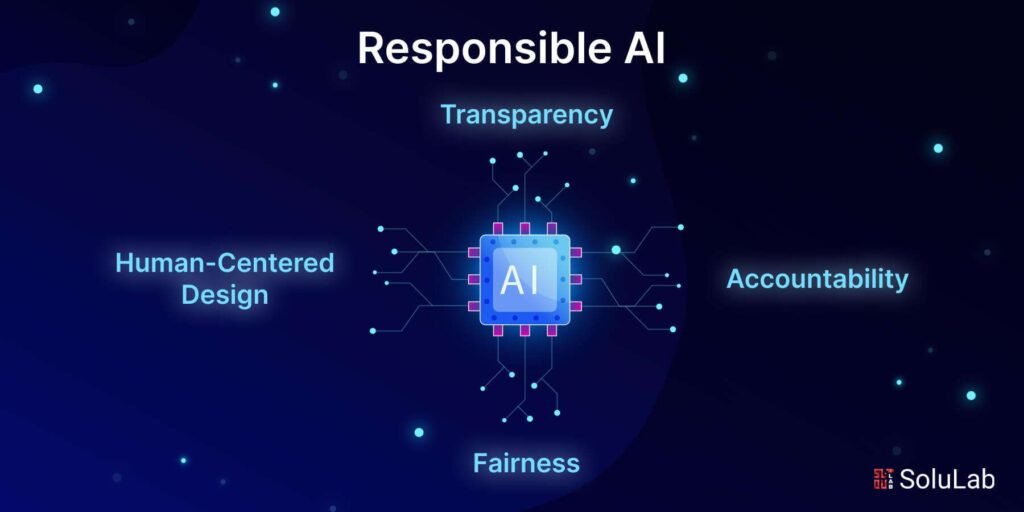
As technology continues to advance at an unprecedented pace, the conversation surrounding ethical and responsible artificial intelligence has become more important than ever. The Future of Artificial Intelligence is no longer a distant vision—it is shaping today’s businesses, governments, and daily life. From automated customer service to predictive healthcare, AI is transforming the world around us. Yet this transformation brings with it not only immense opportunities but also significant ethical responsibilities. To ensure that AI contributes positively to society, we must adopt a framework built on transparency, fairness, accountability, and human-centric values.
This comprehensive guide explores why embracing ethical and responsible AI is essential, what it involves, the challenges we face, and how organizations and individuals can take meaningful steps toward building a safer, more trustworthy AI ecosystem.
Understanding Ethical and Responsible AI
Ethical and responsible AI refers to the development, deployment, and use of artificial intelligence systems in ways that respect human rights, safeguard privacy, ensure fairness, and prioritize societal well-being. It requires stakeholders—engineers, policymakers, business leaders, and users—to collaborate in designing systems that minimize harm, prevent bias, and operate with clear accountability.
In The Future of Artificial Intelligence, we must ensure that AI supplements human intelligence rather than replacing ethical judgment. Ethical AI is not merely a technical requirement; it is a societal obligation. Every AI system must be built with the understanding that behind every data point is a real human being whose dignity must be protected.
Why Ethical AI Matters in the Future of Artificial Intelligence

As AI becomes more deeply embedded in critical sectors—such as healthcare, law enforcement, finance, and education—it influences life-changing decisions. Ethical AI ensures:
1. Fairness and Inclusivity
Biased datasets can lead to discriminatory outcomes. Ethical AI encourages diversity in data collection, allowing systems to perform fairly across racial, gender, cultural, and socioeconomic groups.
2. Transparency and Trust
Users should understand how AI decisions are made. Transparent AI systems boost trust and encourage wider adoption in industries like finance, healthcare, and public services.
3. Accountability and Safety
As autonomous systems make decisions that impact human lives, accountability frameworks can prevent misuse, errors, and harmful outcomes.
4. Long-term Sustainability
Ethical AI ensures that future systems are scalable, secure, and aligned with global sustainability goals—preventing long-term risks or societal disruptions.
Ethical AI is not an optional component; it is the core foundation of The Future of Artificial Intelligence.
Key Principles of Ethical and Responsible AI
To fully embrace ethical AI, organizations should adopt the following core principles:
1. Transparency
AI systems should explain their decision-making processes. Black-box models may be powerful, but they can erode trust if users cannot understand how decisions are reached.
2. Fairness and Non-Discrimination
AI systems must not reinforce societal biases. Developers must assess data sources, audit algorithms, and ensure that marginalized groups are not disadvantaged by automated decisions.
3. Accountability
Every AI decision should be traceable. Human oversight must remain central to all AI operations to prevent system misuse and unintended consequences.
4. Privacy Protection
AI systems must uphold the highest standards of data security and confidentiality. Secure design, encryption, and anonymization are essential pillars of responsible AI.
5. Safety and Reliability
AI must function as expected under various conditions. Testing across multiple scenarios ensures stable performance and protects users from harm.
6. Human-Centricity
AI should enhance human capability rather than replace it. Ethical AI prioritizes user well-being, autonomy, and empowerment.
These principles guide developers and organizations toward building systems aligned with the ethical vision of The Future of Artificial Intelligence.
Real-World Examples of Ethical and Unethical AI
Ethical AI in Action
- Healthcare Diagnostics: AI tools that help identify diseases using ethical data-sharing policies.
- Fraud Detection in Banking: Secure and transparent AI models that detect fraud without profiling customers unfairly.
- Educational AI Tools: Personalized learning platforms that respect student privacy.
Unethical AI Incidents
- Bias in Hiring Algorithms: Systems trained on biased data that favor certain demographic groups.
- Facial Recognition Misuse: Incorrect identification leading to wrongful arrests or privacy violations.
- Surveillance AI Without Consent: Systems deployed without transparency, often infringing on civil liberties.
Examining these cases helps us understand why ethical frameworks are critical in guiding The Future of Artificial Intelligence.
The Importance of Ethical AI for Businesses
Businesses adopting AI without ethical considerations risk damaging their brand reputation, facing legal issues, and losing customer trust. Ethical AI offers several advantages:
1. Stronger Customer Relationships
Consumers are more likely to engage with brands that protect their data and treat them fairly.
2. Reduced Legal and Compliance Risks
Following ethical standards supports adherence to global regulations like GDPR, CCPA, and AI Act frameworks.
3. Improved Innovation
Ethical AI creates more inclusive products, opening doors to a broader customer base.
4. Sustainable Growth
By prioritizing long-term safety and fairness, companies ensure continued success in evolving markets.
In a world shaped by The Future of Artificial Intelligence, ethically responsible businesses will stand out as industry leaders.
Challenges in Implementing Ethical AI
While ethical AI is essential, achieving it is not without challenges:
1. Data Bias
Many datasets reflect societal inequalities. Cleaning and auditing data requires time, skill, and diverse viewpoints.
2. Lack of Clear Regulations
AI regulation varies across nations. Without consistent global standards, implementation becomes complex.
3. Limited Transparency in Complex Models
Advanced models like deep learning can be difficult to interpret, creating transparency challenges.
4. Skill Gaps
Not all developers, policymakers, or organizations fully understand ethical AI practices.
5. Resource Constraints
Smaller businesses may struggle with the cost of adopting ethical AI practices.
Overcoming these challenges is critical for building a future where The Future of Artificial Intelligence benefits everyone.
How Businesses and Developers Can Embrace Ethical AI
To adopt ethical AI successfully, organizations should take the following steps:
1. Establish an AI Ethics Framework
Create company policies that outline ethical guidelines, responsibilities, and review processes.
2. Conduct Regular Algorithm Audits
Audit data and algorithms periodically to identify bias, security vulnerabilities, or unfair outcomes.
3. Prioritize Explainable AI (XAI)
Use models that provide clear insights into the decision-making process, especially in high-stakes fields.
4. Implement Strong Data Governance
Ensure that customer data is collected with consent, stored securely, and used responsibly.
5. Integrate Human Oversight
Keep humans involved in reviewing AI decisions, especially those affecting health, finance, or legal outcomes.
6. Train Employees on Ethical AI
Provide continuous training on fairness, privacy, and bias prevention.
7. Foster Cross-Functional Collaboration
Involve ethicists, engineers, legal experts, and diverse stakeholders in AI development.
Taking these steps moves organizations closer to a safer and more ethical future driven by AI.
Ethical AI and Global Regulations
Governments worldwide are creating policies to protect citizens from unethical AI:
- European Union (AI Act): A risk-based approach to regulate AI systems.
- United States: Draft frameworks focusing on transparency and accountability.
- Asia and Africa: Emerging regulations on privacy, surveillance, and data protection.
These regulations demonstrate that ethical AI is a global priority and will play a central role in shaping The Future of Artificial Intelligence.
The Human Role in Ethical AI
Despite AI’s capabilities, humans remain essential. People from diverse backgrounds must evaluate whether the technology aligns with societal values. Ethical AI requires:
- Compassion
- Critical thinking
- Moral judgment
- Cultural awareness
Humans must oversee algorithms, provide context, and ensure technology respects human dignity. AI should enhance our abilities—not replace human conscience.
The Future of Artificial Intelligence Depends on Ethical Adoption
As we look ahead, one truth becomes undeniable: The Future of Artificial Intelligence will be shaped by the ethical choices we make today. AI holds the power to solve global challenges, improve healthcare outcomes, support climate action, and revolutionize business efficiency. But without responsible governance, it can also widen inequalities, threaten privacy, and undermine trust.
Choosing ethical AI is not simply a trend—it is a long-term investment in the well-being of society.
As AI becomes more powerful, ethical considerations become non-negotiable.
Bias in AI systems, privacy concerns, and transparency issues can undermine trust if not addressed.
Example:
IBM’s AI Ethics Board and Google’s Responsible AI frameworks showcase how major companies are setting governance standards to reduce algorithmic bias and ensure fair data usage.
Actionable Advice:
- Prioritize transparent algorithms.
- Build diverse datasets.
- Conduct routine audits for fairness and accuracy.
2. Do Invest in Human–AI Collaboration
AI isn’t here to replace humans — it’s here to augment them.
Case Study:
In healthcare, AI systems like DeepMind’s diagnostic tools can analyze medical scans faster than clinicians, but doctors still oversee diagnoses and treatment strategies.
Actionable Advice:
- Use AI to automate repetitive tasks.
- Redirect human talent toward creativity, critical thinking, and relationship-building.
- Provide training to help people work confidently with AI tools.
3. Do Prioritize Data Privacy and Security
The future of AI depends on data — but the data must be protected.
Example:
The rise of differential privacy (used by Apple and the U.S. Census Bureau) highlights how companies are safeguarding information while still gaining insights.
Actionable Advice:
- Implement strong encryption standards.
- Limit data collection to what is necessary.
- Create clear data-handling policies for users.
4. Do Support AI Education and Upskilling
As AI integrates into every industry, digital literacy is essential.
Expert Opinion:
AI pioneer Andrew Ng frequently emphasizes that “AI is the new electricity,” and workers must be skilled in using it, just as earlier generations adapted to computers.
Actionable Advice:
- Offer AI literacy programs in schools.
- Train employees on AI tools and automation.
- Encourage continuous learning in emerging technologies.
5. Do Experiment with Innovation
The most successful AI adopters test, iterate, and adapt.
Case Study:
Amazon’s AI-driven logistics and recommendation engines evolved through constant experimentation and real-world testing.
Actionable Advice:
- Conduct pilot programs before scaling AI solutions.
- Track performance metrics and user feedback.
- Encourage cross-team collaboration on AI projects.
The Don’ts: What to Avoid in the AI-Driven Future
1. Don’t Treat AI as a Magic Solution
AI is powerful, but it’s not a miracle cure.
Common Pitfall:
Companies often deploy AI without understanding the infrastructure, data, or strategy required — leading to failed projects.
Avoid by:
- Setting clear objectives.
- Ensuring high-quality structured data.
- Aligning AI tools with business or community needs.
2. Don’t Ignore Ethical Risks
Unchecked AI can lead to discrimination, misinformation, and privacy violations.
Example:
In 2019, an AI healthcare algorithm was criticized for racial bias that led to incorrect care prioritization for Black patients.
Avoid by:
- Conducting impact assessments.
- Using diverse testing datasets.
- Having ethics oversight committees.
3. Don’t Rely Solely on Automation
Blind automation can remove the human judgment necessary for nuanced decisions.
Example:
Automated hiring systems have been found to filter out qualified candidates due to biased patterns in historical hiring data.
Avoid by:
- Keeping humans in the loop.
- Reviewing automated decisions regularly.
- Designing hybrid workflows for oversight.
4. Don’t Neglect Cybersecurity
AI systems are high-value targets for cyberattacks.
Example:
Adversarial attacks — where tiny data changes fool AI models — show how vulnerable systems can be if left unprotected.
Avoid by:
- Updating models regularly.
- Using adversarial training techniques.
- Implementing AI-specific security protocols.
5. Don’t Fall Behind on Regulations
AI governance is rapidly evolving worldwide.
Example:
The EU AI Act categorizes AI systems by risk level and enforces strict rules for high-risk applications such as facial recognition.
Avoid by:
- Staying current on AI policies.
- Ensuring compliance with data laws (GDPR, CCPA, etc.).
- Preparing for future regulatory changes.
Conclusion: Shaping an AI Future That Works for Everyone
Artificial Intelligence will transform our world — but whether it becomes a tool for progress or a source of uncertainty depends on the choices we make today. By following the dos and don’ts outlined above, individuals, businesses, and society can embrace AI in a way that is innovative, ethical, and human-centered.
Call to Action
Start by evaluating how AI impacts your life, work, or organization.
Ask yourself:
- Where can AI help you streamline tasks?
- What ethical safeguards do you need?
- How can you upskill to stay ahead?
The future of AI is not just happening to us — we get to shape it. Let’s shape it wisely.



Pingback: Samsung UI8 Update: Everything You Must Know About Features.
Thanks for your comment! 👍
Yes, the new AI processing can make selfies sharper and more detailed, which definitely improves overall image quality. However, sometimes AI can make photos look a bit unnatural if it over-processes the details or smooths the skin too much.
So it really depends on the user:
– If the AI gives you the results you like, that’s great.
– If it looks “over-edited,” you can try Pro Mode/RAW or more natural camera settings.
Thanks again for sharing your thoughts! 🙌