
Introduction
In today’s hyper-connected digital era, cybersecurity has become one of the most critical concerns for individuals, businesses, governments, and educational institutions. As technology evolves, cyber threats are growing in both scale and sophistication. At the same time, Artificial Intelligence (AI) is transforming how we defend against these threats—and, paradoxically, how cybercriminals launch more advanced attacks.
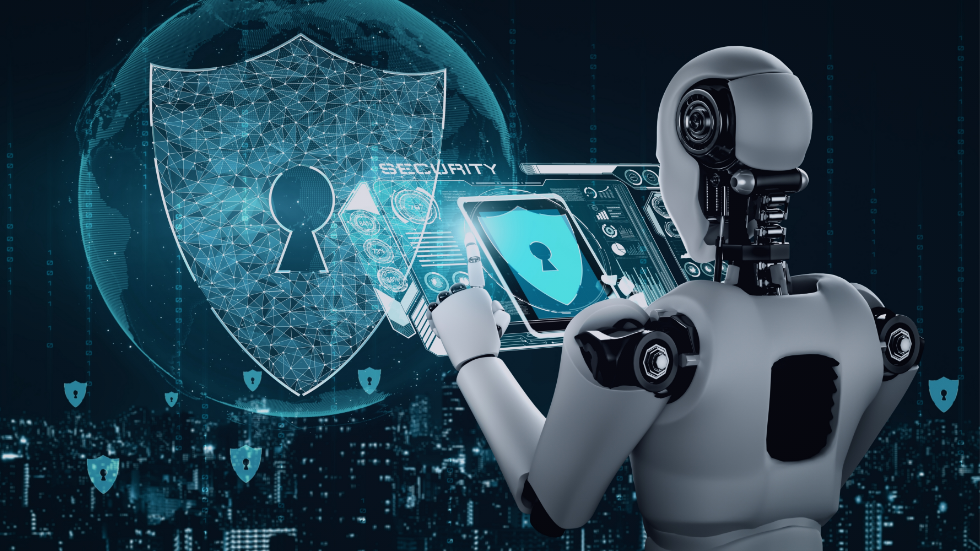
This convergence has given rise to a new and essential domain: Cybersecurity & AI Safety. While AI strengthens cybersecurity by automating threat detection and response, it also introduces new risks, including AI misuse, bias, data leakage, and autonomous decision-making errors.
This article explores the deep relationship between cybersecurity and AI safety, current threats, benefits, ethical concerns, real-world applications, and future trends—making it a complete SEO-optimized guide to one of the most important technology topics today.
What Is Cybersecurity?
Cybersecurity refers to the practice of protecting systems, networks, devices, and data from digital attacks. These attacks typically aim to:
- Access sensitive information
- Steal money or identities
- Disrupt services
- Damage systems or reputations
Cybersecurity applies to everything from personal smartphones to global financial systems.
Key Areas of Cybersecurity
- Network Security – Protecting internal networks from unauthorized access
- Application Security – Securing software from vulnerabilities
- Information Security – Protecting data integrity and privacy
- Cloud Security – Safeguarding cloud-based infrastructure
- Operational Security – Managing permissions and processes
- Disaster Recovery & Business Continuity
With increasing digital dependence, cybersecurity is no longer optional—it is essential.
What Is AI Safety?
AI Safety focuses on ensuring that artificial intelligence systems operate in a way that is:
- Reliable
- Secure
- Ethical
- Transparent
- Aligned with human values
AI safety addresses risks such as unintended behavior, biased decisions, data misuse, and autonomous actions beyond human control.
Why AI Safety Matters
AI systems now influence:
- Hiring decisions
- Medical diagnoses
- Financial approvals
- Cybersecurity defenses
- Surveillance systems
A failure in AI safety can lead to serious real-world consequences, including discrimination, privacy violations, and large-scale security breaches.
The Intersection of Cybersecurity and AI Safety
Cybersecurity and AI safety are deeply interconnected. AI is both a tool for defense and a potential weapon for attackers.
How AI Enhances Cybersecurity
- Detects threats faster than humans
- Analyzes massive datasets in real time
- Predicts attacks before they happen
- Automates incident response
How AI Introduces New Risks
- AI-generated malware
- Deepfake-based phishing attacks
- Automated hacking tools
- Exploitation of AI model weaknesses
Because of this dual role, AI must be secured just like any other critical system.
Modern Cyber Threats in the AI Era
1. AI-Powered Cyber Attacks
Cybercriminals now use AI to:
- Automatically scan for vulnerabilities
- Generate realistic phishing emails
- Crack passwords faster
- Adapt malware in real time
These attacks are harder to detect because they change behavior dynamically.
2. Phishing and Deepfakes
AI-generated text, images, and voices enable highly convincing scams:
- Fake emails from trusted sources
- Voice cloning of executives
- Video deepfakes for fraud
Traditional security filters often fail to detect these advanced threats.
3. Data Poisoning Attacks
In AI systems, attackers can manipulate training data so that:
- AI learns incorrect behavior
- Security models make wrong decisions
- Bias is intentionally introduced
This is especially dangerous in cybersecurity AI systems that rely on accurate data.
4. Model Theft and Reverse Engineering
AI models themselves are valuable assets. Attackers may:
- Steal proprietary AI models
- Extract sensitive training data
- Replicate security algorithms
This creates intellectual property and privacy risks.
How AI Is Used in Cybersecurity Defense
Despite the risks, AI is one of the strongest tools in modern cybersecurity.
1. AI-Based Threat Detection
Machine learning models analyze:
- Network traffic
- User behavior
- System logs
They identify anomalies that indicate:
- Malware
- Insider threats
- Zero-day attacks
Unlike traditional tools, AI adapts to new threats.
2. Automated Incident Response
AI can:
- Isolate infected systems
- Block malicious IP addresses
- Trigger alerts instantly
This reduces response time from hours to seconds.
3. Behavioral Analytics
AI learns normal user behavior and detects:
- Unusual login patterns
- Abnormal file access
- Suspicious data transfers
This is especially effective against insider threats.
4. Fraud Detection
In banking and e-commerce, AI systems prevent:
- Credit card fraud
- Account takeovers
- Identity theft
They continuously learn from new attack patterns.
AI Safety Challenges in Cybersecurity
While AI improves security, it also raises serious safety concerns.
1. Bias in AI Security Systems
If training data is biased:
- Legitimate users may be blocked
- Certain groups may be unfairly targeted
- Security decisions may be inaccurate
AI safety requires fair and diverse datasets.
2. Lack of Transparency (Black Box AI)
Many AI models cannot explain:
- Why a threat was flagged
- Why access was denied
This creates trust and accountability issues, especially in critical sectors.
3. Over-Reliance on Automation
Excessive trust in AI can be dangerous:
- False positives may disrupt services
- False negatives may allow attacks
- Humans may lose critical decision-making skills
AI should assist, not replace, human judgment.
4. Adversarial Attacks on AI
Attackers can manipulate inputs to:
- Trick AI into misclassification
- Bypass detection systems
- Disable security models
This makes AI robustness a key safety requirement.
Ethical and Legal Considerations
Cybersecurity & AI safety are not just technical issues—they are ethical and legal challenges.
Privacy Concerns
AI security systems often monitor:
- User activity
- Communications
- Personal data
Without safeguards, this can lead to:
- Surveillance abuse
- Data misuse
- Privacy violations
Accountability and Responsibility
If an AI system makes a wrong decision:
- Who is responsible?
- The developer?
- The organization?
- The AI system?
Clear accountability frameworks are essential.
Global Regulations
Governments are introducing laws focused on:
- AI transparency
- Data protection
- Cyber resilience
Compliance is becoming a core part of cybersecurity strategy.
Best Practices for Cybersecurity & AI Safety
1. Secure AI by Design
- Encrypt training data
- Secure model storage
- Limit access permissions
AI systems must be protected like critical infrastructure.
2. Human-in-the-Loop Systems
- Combine AI automation with human oversight
- Review high-risk decisions manually
- Allow override mechanisms
This improves both safety and trust.
3. Continuous Monitoring and Testing
- Regularly test AI models for vulnerabilities
- Simulate adversarial attacks
- Update models frequently
Security is an ongoing process.
4. Ethical AI Frameworks
Organizations should adopt:
- Fairness guidelines
- Transparency standards
- Responsible AI policies
Ethics strengthens long-term security.
5. Employee Awareness and Training
Humans remain the weakest—and strongest—link:
- Train users to recognize AI-based scams
- Educate staff on cybersecurity hygiene
- Promote security-first culture
Real-World Applications
Cybersecurity in Healthcare
AI protects:
- Patient records
- Medical devices
- Hospital networks
AI safety is critical because errors can affect lives.
Cybersecurity in Finance
Banks use AI for:
- Fraud detection
- Risk assessment
- Secure transactions
Strong AI governance ensures trust and stability.
Cybersecurity in Education
Schools and universities rely on AI to:
- Secure student data
- Prevent cyberbullying
- Protect online learning platforms
Safety and privacy are top priorities.
Government and National Security
AI helps defend against:
- Cyber warfare
- Espionage
- Infrastructure attacks
AI safety prevents accidental escalation or misuse.
Future Trends in Cybersecurity & AI Safety
1. AI vs AI Cyber Warfare
Future cybersecurity may involve:
- Defensive AI systems
- Offensive AI malware
- Automated cyber battles
Human oversight will be critical.
2. Explainable AI (XAI)
Explainable AI will:
- Improve trust
- Enable auditing
- Support legal compliance
Transparency will become a requirement.
3. Quantum-Resistant Security
AI and cybersecurity must prepare for:
- Quantum computing threats
- New encryption standards
- Advanced cryptographic systems
4. Global AI Safety Standards
International cooperation will define:
- AI usage limits
- Cybersecurity norms
- Ethical boundaries
Why Cybersecurity & AI Safety Matter for the Future
As AI becomes more powerful, security without safety is dangerous, and AI without cybersecurity is vulnerable. Together, cybersecurity and AI safety form the foundation of a trustworthy digital future.
Failing to address these issues could result in:
- Massive data breaches
- Loss of public trust
- Economic disruption
- Ethical crises
Investing in cybersecurity and AI safety is not just about technology—it is about protecting people, rights, and societies.
Conclusion
Cybersecurity & AI Safety represent one of the most important challenges and opportunities of the modern technological age. AI has the power to revolutionize cybersecurity by detecting threats faster and more accurately than ever before. However, without proper safety measures, AI can also introduce new vulnerabilities and ethical risks.
The future belongs to systems that are:
- Secure
- Transparent
- Ethical
- Human-centered
By combining strong cybersecurity practices with responsible AI safety principles, we can build a digital world that is not only innovative—but also safe, fair, and resilient.